How to Validate a Software Workflow Before Building It
Validate a software workflow with real inputs, a manual delivery test and a scorecard that separates usefulness from founder assistance.
Luka Abramovic3 min read
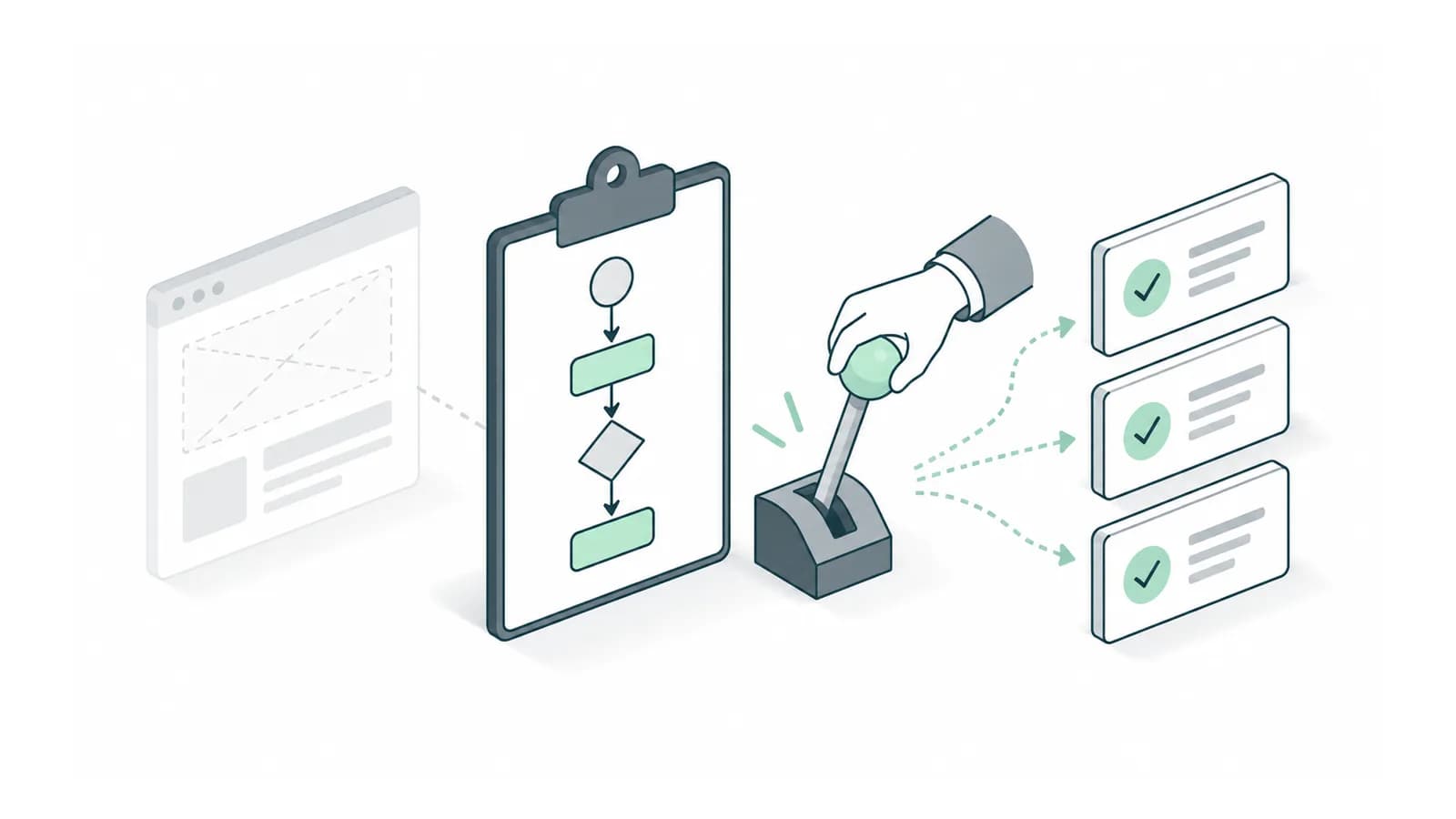
To validate a software workflow, deliver its intended result manually using the inputs a future user will provide. Then watch the user try to use that result. This tests whether the proposed journey produces something useful before you invest in automating it.
A domain expert can accidentally improve a test by filling gaps from experience. The founder recognizes the customer, interprets a vague request and supplies missing context. A future customer using software will not necessarily receive that help. Keep a record of it.
Define the output and its next use
Choose one task and write a completion sentence. For example, the user can send a supplier brief without rewriting required specifications. Ask the user to bring a recent input they can share, and identify the actual recipient or next step for the output.
Freeze a copy of the initial input. Deliver the result using the proposed rules, marking every extra question you needed to ask. If the user needed a call to interpret the result, record that too. The test should expose the conversation your eventual product must support.
Copy a test record for each attempt
User role
Task they were already trying to finish
Input supplied at the start
Information requested later
Result delivered
Next action attempted with that result
Changes the user made before using it
Founder interventions and minutes
Outcome and reason for stopping
Evidence of a second use
Fill the record during the test. Keep the original and edited output side by side. Edits reveal whether the problem is missing information, inaccurate reasoning, unsuitable format or a task the user never needed. Ask what the edit enabled them to do, rather than whether they liked the result.
Separate three explanations for a weak result
If the result is wrong because the user could not supply a fact, investigate the input journey. If the input is complete but the rule produces the wrong recommendation, revise the rule. If the result is accurate but nobody uses it, revisit the promised outcome or its place in the existing workflow.
A practical diagnostic is to change one element at a time. Rewriting the form, output and target audience together can improve the next test while leaving you unable to explain why. Keep a dated version and the change you expect it to affect.
Make a build decision from observed work
Consider an illustrative trial with ten attempts. Six outputs are used, two are abandoned and two need substantial rewriting. Of the six used outputs, four required 20 minutes of founder interpretation. You have six useful outcomes but only two unassisted outcomes. Interpretation took 80 minutes before delivery work is counted.
Turn recurring interpretation into questions or explicit rules and retest. If every customer requires unrelated consulting, the first product may need a service component. Do not silently exclude those users to improve the result.
Write a decision rule before the next test. For example, proceed when the same defined role can supply the required inputs and use the output without unrecorded interpretation. This is a proposed gate, not a universal success benchmark. Keep evidence of a voluntary second use separate from a second attempt you requested. They answer different questions about usefulness and repeat demand.
Bring the input and output from one manual trial. We can identify what the product must ask, decide and hand back. Discuss the first release with Adamant Code.