What Should Happen When an Earlier Input Changes in an AI Workflow?
Handle AI workflow input changes with a dependency map, output versions and clear rules for keeping, reviewing or regenerating downstream work.
Luka Abramovic3 min read
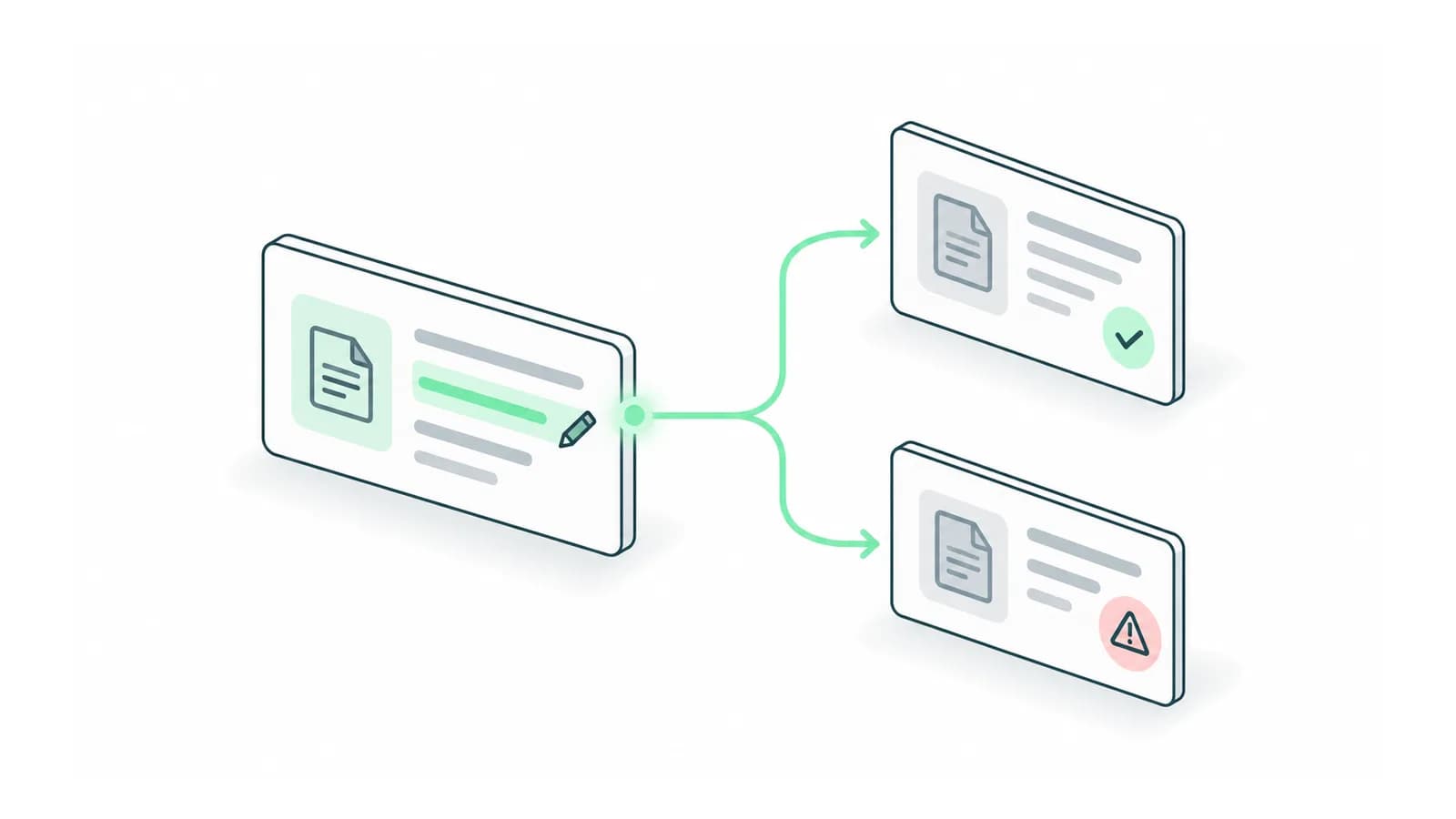
AI workflow input changes should trigger a review of dependent outputs. They should not silently leave an old result looking current or overwrite work the user has edited. Record which input revision produced each output so the product can explain what changed and what needs attention.
A domain-expert product may guide someone through a sequence, but screen order alone does not define dependency. Changing a project name may affect a heading. Changing the target customer may affect the reasoning in several later outputs. Model those relationships explicitly.
Draw the actual dependency map
| Changed input | Dependent output | Proposed response |
|---|---|---|
| Display name | Document heading | Update the label where appropriate |
| Target customer | Problem summary and recommendation | Mark for review before reuse |
| Uploaded evidence | Evidence-based analysis | Require recheck against the new version |
| Visual preference | Presentation only | Keep unrelated analysis |
Use these as illustrative categories. For each real output, list the input fields and source versions it actually uses. Avoid declaring every previous screen a dependency simply because it comes earlier.
Give an old result a precise status
An output can be stale without being demonstrably wrong. It was produced from an older input and needs review. Label that state separately from failed generation or rejected content. Show the changed input so the user knows why attention is required.
Keep the old result readable while the next action is decided. If the user has edited it, distinguish their text from the generated starting point. Regenerating into the same field can destroy deliberate work even when the new AI answer is reasonable.
Preview the effect before regenerating
Input changed and previous revision
Outputs that depend on this input
Outputs unaffected by the change
User edits that must be preserved
Proposed regenerate or review action
Usage charged under the product's actual rules
Result version that will remain available
User confirmation where required
In an illustrative workflow with six outputs, only two depend on a revised audience description. Regenerating all six performs four unnecessary generations. If each consumes one product credit, the difference is two credits versus six. These are fictional product units, not a vendor price claim.
Show the actual usage rule before the user commits. If generation fails, define whether the reservation is returned, retried or charged. Keep that rule consistent with the product’s entitlement model.
Test a late result from an older input
Start generation from revision A. Change the input to revision B and start the new generation. Arrange a controlled test in which the A job finishes last. It must not replace B merely because it completed later.
Compare the job’s recorded input revision with the current task revision before promoting its result. Keep the old output associated with A or mark it as superseded. This is a freshness check, not a judgment about the model’s writing quality.
The final acceptance evidence should show a changed input, the affected outputs, preserved user edits and the correct result after jobs complete out of order. That test makes the dependency rules observable to the founder.
Bring the workflow steps and one input users often revise. We can map which outputs should remain, be reviewed or be regenerated. Discuss the first release with Adamant Code.