Product Onboarding That Gets a Domain-Expert Customer to a First Result
Measure product onboarding time to first value with a usable-result definition, setup dependency audit and observation worksheet.
Luka Abramovic3 min read
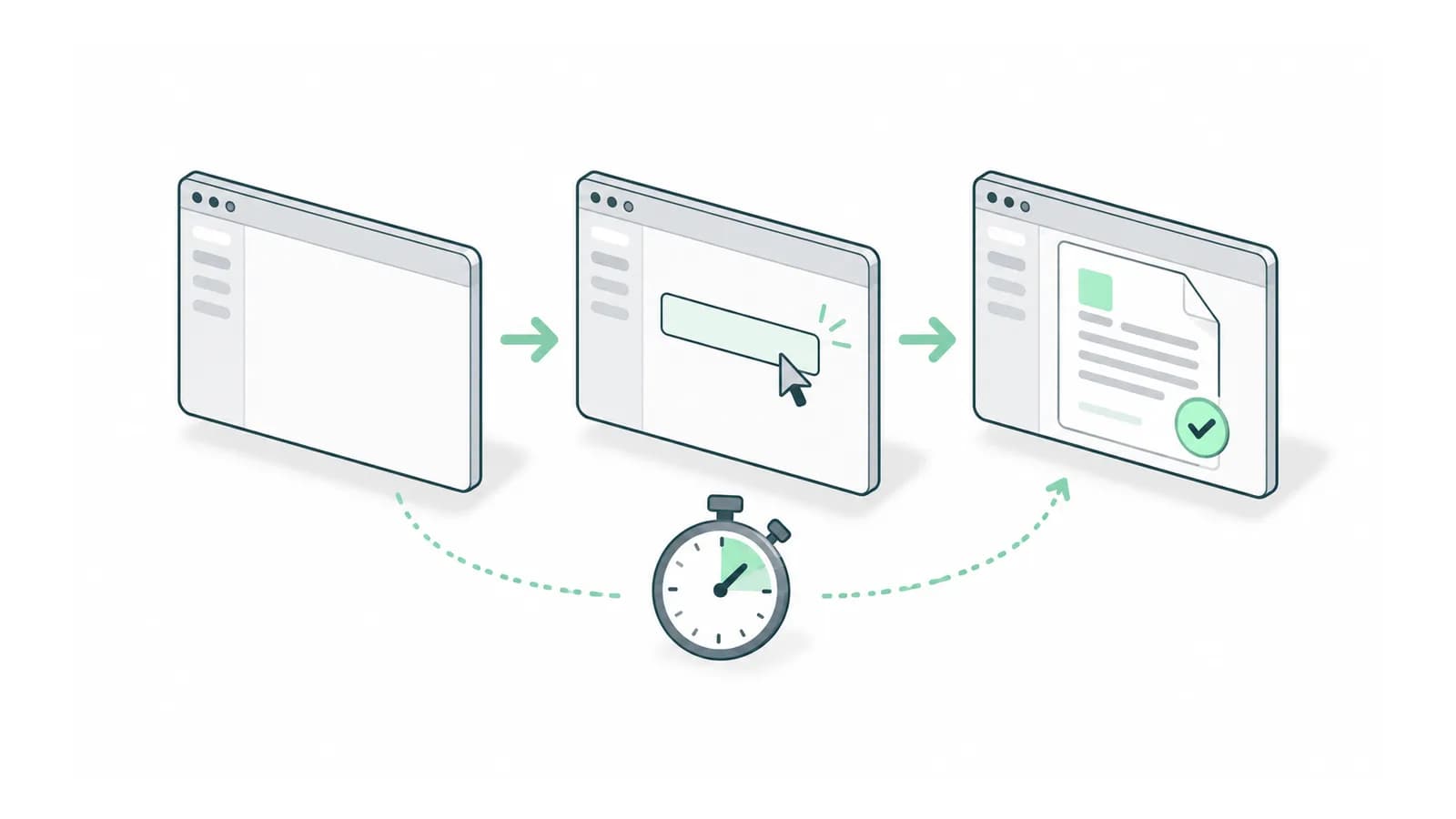
Product onboarding time to first value should end when the user has a result they can use for their real task. Account creation, a completed tour and a sample dashboard are intermediate events. Define the useful result before optimizing how quickly someone reaches them.
For a product based on specialist expertise, the first obstacle may be obtaining the right input rather than learning the interface. An elegant onboarding flow cannot manufacture a document the user must request from another department.
Define a first-result event with evidence
Write a sentence naming the user, output and next action. For example, a coordinator reviews a complete supplier brief and can send it through their existing process. List the conditions that make the output usable, including required fields and unresolved questions.
Mark example data clearly. A user who completes a sample brief has learned the interface. They have not necessarily supplied their own evidence or used a real result. Track those events separately so the sample does not inflate activation.
Audit every setup request
| Requested input | Needed for first result? | Source | Action |
|---|---|---|---|
| Current task details | Yes | User’s working record | Collect now |
| Brand styling | No for this example | Company assets | Offer after first result |
| Required evidence file | Yes | Another team | Explain how to obtain it and save progress |
| Full colleague list | No for a solo first task | Administrator | Defer unless collaboration is required |
These illustrative choices depend on the task. Do not defer an input merely to shorten the form if the output cannot be trusted without it. Instead, explain its purpose and make an unfinished task recoverable.
Observe elapsed time and active work
Record when the user begins, when they wait for external input and when they obtain a usable output. In an illustrative attempt, account setup takes three minutes, task input takes seven and waiting for a file takes two days. Active work is ten minutes, but elapsed time is more than two days.
Report both. Removing one minute from account setup does not resolve the file dependency. A request checklist, supported import or better preparation instructions may address the actual bottleneck. Choose the change from the observed cause.
Test the return journey
First-result definition
Required inputs and their sources
Time spent actively working
Time waiting and reason
Help or explanation required
Point where work stopped
How the user finds the unfinished task
Evidence the final result was used
Have a participant leave before completion and return through the normal sign-in route. Check that the product shows the unfinished task and the exact missing input. A generic welcome screen can force someone to reconstruct work the system already knows about.
After changing onboarding, repeat the same task conditions and inspect whether the intended blocker improved. Keep users who never reach the result in the report. Measuring only successful users can make onboarding appear faster while the hardest cases disappear from view.
Bring the first task and the current onboarding flow. We can identify the input or step that actually delays the first usable result. Discuss the first release with Adamant Code.