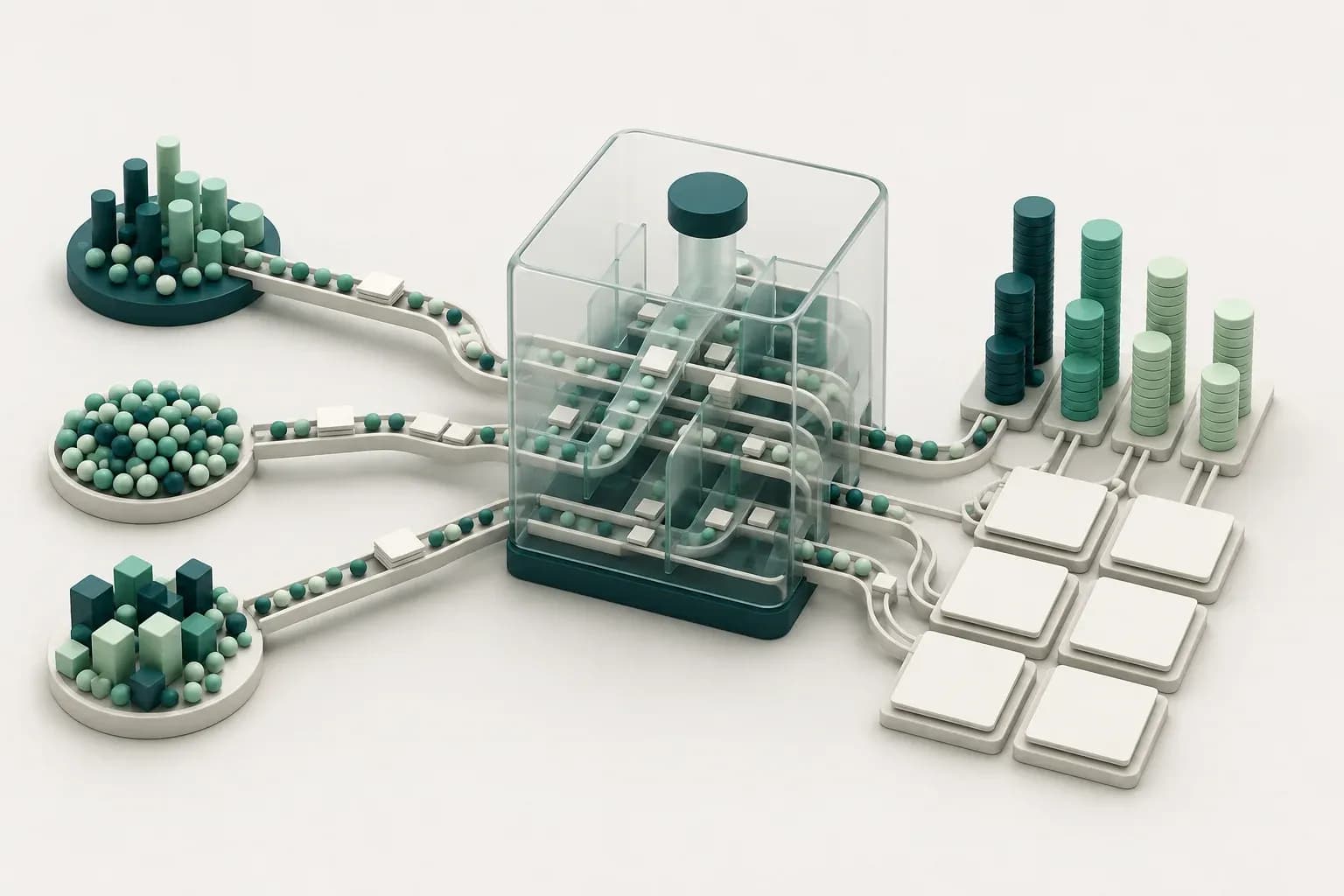
Bring operational data together
Recurring data pipelines make operational information available to dashboards and internal workflows. Concept illustration: data collection and organization.
A two-year partnership brought operational data, analytics, and AI work into one product for a repeat client. All visuals are conceptual illustrations created for this case study; client identity and implementation details remain confidential.
internal users
connected properties
average rows processed
Employees were working across manual processes, separate AI accounts, disconnected data, and individually maintained prompts and outputs. A successful first build showed the potential for a larger product that could bring those workflows into one operating system.
The platform had to support substantial data and operational complexity without asking non-technical users to understand the systems underneath it. Confidentiality also limits how much of the implementation can be described publicly.
Prompts, outputs, quality checks, analytics, and reporting were spread across separate people and tools.
Hundreds of connected properties and roughly 220k rows per day required dependable data movement and refresh logic.
Complex configuration and analytics had to become understandable without exposing unnecessary implementation detail.
We worked across product strategy, internal workflow design, data engineering, AI behavior, dashboard UX, permissions, and platform reliability. The job was to make complex internal operations feel like one coherent product.
We turned technical and operational requirements into workflows that non-technical users could follow.
We connected large operational data flows to the dashboards and AI workflows that depended on them.
We added permissions, scheduling, failure handling, and quality controls needed for everyday internal work.
The platform connects operational data, user requests, AI generation, and review in one place.
Scheduled pipelines keep connected operational information available to the platform.
A user starts from a dashboard or natural-language request without managing the underlying systems.
The platform produces an internal output or analyzes the available operational data.
Results remain inside the product so users can check quality and continue the next operational step.
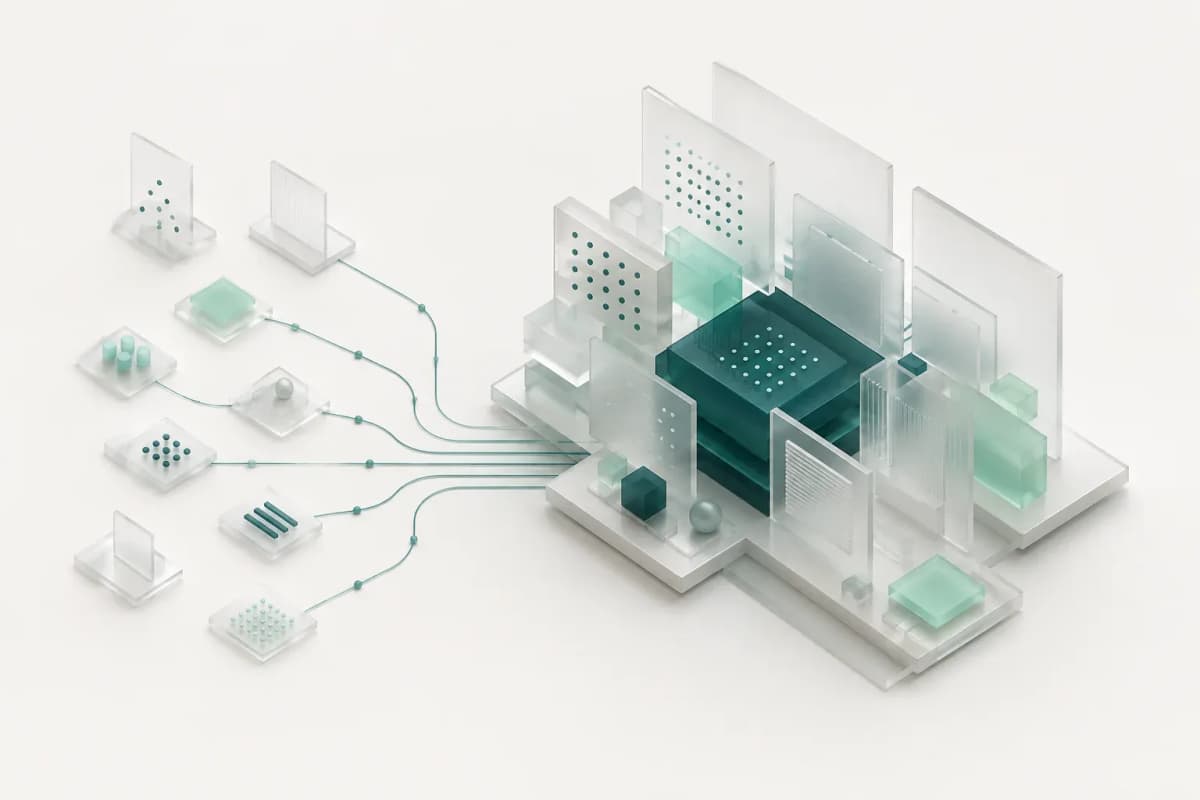
Original AI-generated concept illustrations show the broad ideas behind the work. They contain no client data and do not reproduce the actual interface or implementation.
Recurring data pipelines make operational information available to dashboards and internal workflows. Concept illustration: data collection and organization.
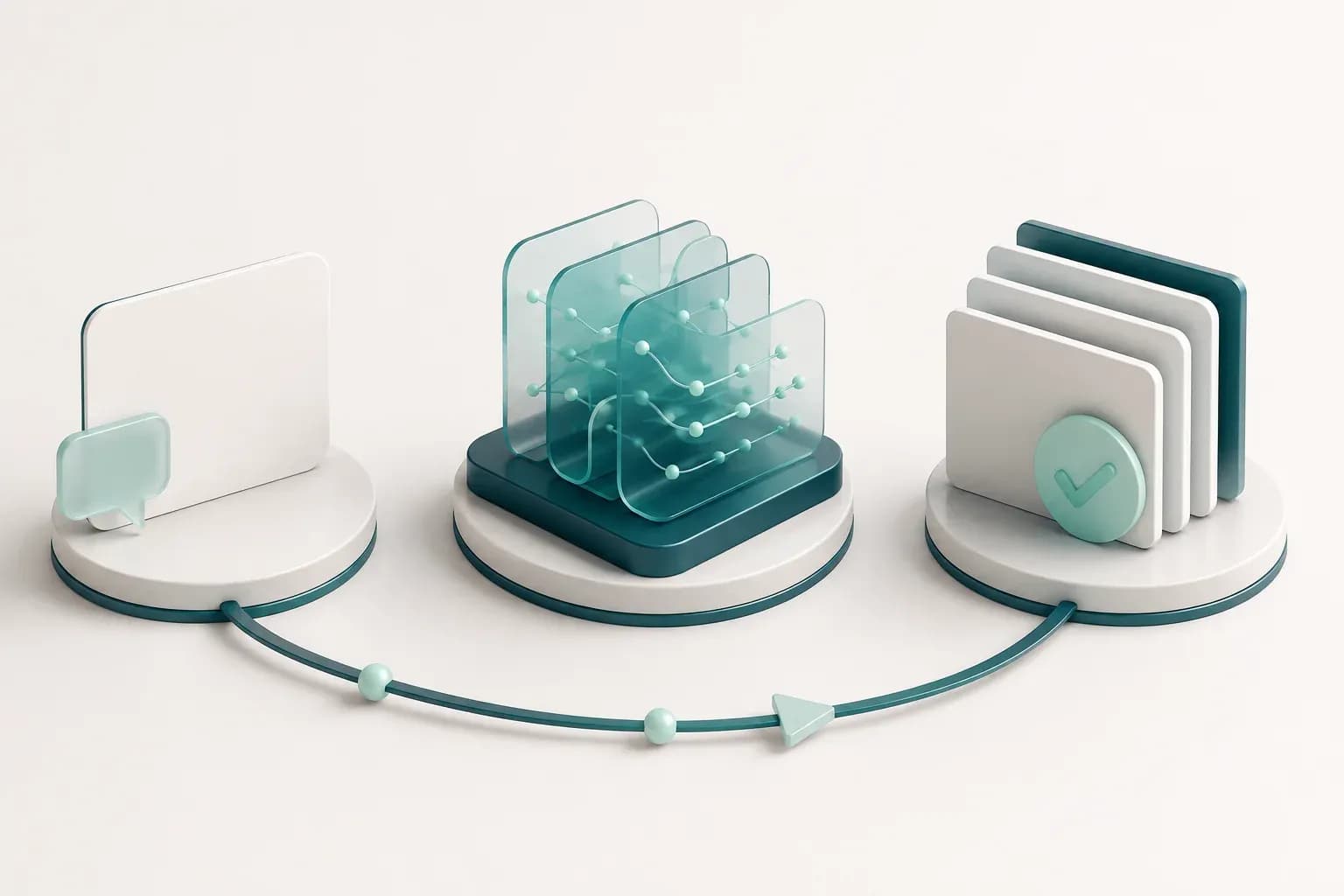
Users request work, generate or analyze information, and review the result inside the platform. Concept illustration: request, generation, and review.
The platform needs to work beyond a single successful request. Permissions, scheduled work, and reliability controls support the team through recurring operations.
Large recurring data flows connect hundreds of properties to internal dashboards and workflows.
Users can explore operational information without working directly with the technical data layer.
Permissions, recurring jobs, and refresh schedules keep access and execution organized.
Failure handling, API-limit management, and data-quality checks support continued internal use.
The platform became part of the client's core internal operations during a two-year partnership. It supports 44 internal users, 400+ connected properties, and roughly 220k rows per day on average. These figures describe the scale supported by the platform, rather than a measured time-saving or revenue result.
The value of an internal AI platform comes from the product around the model: reliable data, understandable workflows, permissions, review, and the operational controls that let a team use it repeatedly.
We can help turn fragmented data, manual workflows, and separate AI tools into one reliable product for your team.
An anonymous client on the speed and quality of everyday work.
“The tools have now started to improve the speed and quality of our work. Complex tasks can now be achieved much easier and faster on a regular basis.”
Bring one manual process, disconnected workflow or software problem. We’ll discuss what needs to work differently, the constraints involved and a sensible next step.
Talk through your workflow
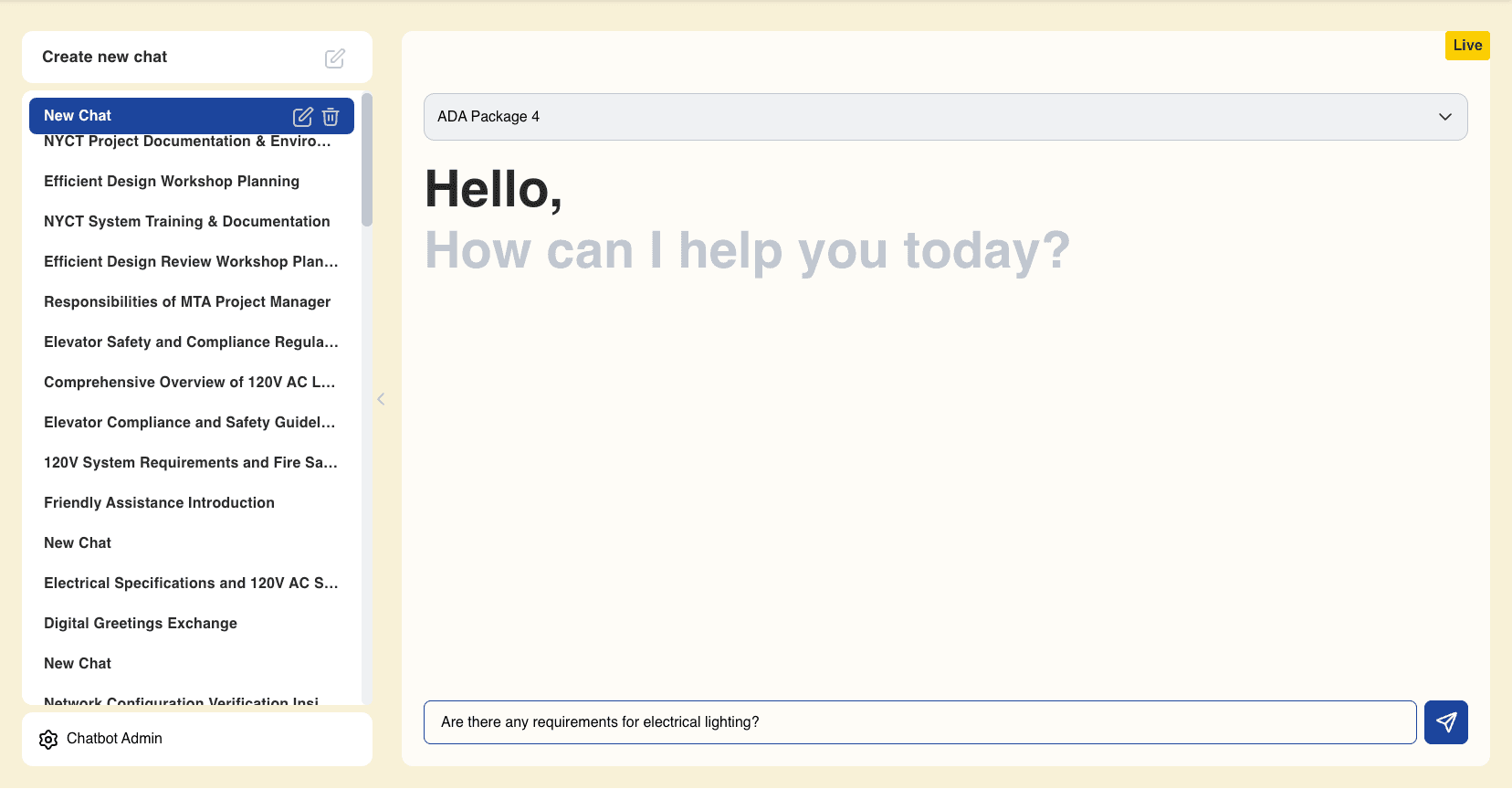
Source-cited AI search across bid-document packages spanning up to 50,000 pages.
Engineers at TCE, an infrastructure company, were navigating bid-document packages that could reach 50,000 pages using Command-F, local files, printouts, and highlighters. We built a source-cited AI search system that brings the answer, page, paragraph, and supporting evidence into one workflow.
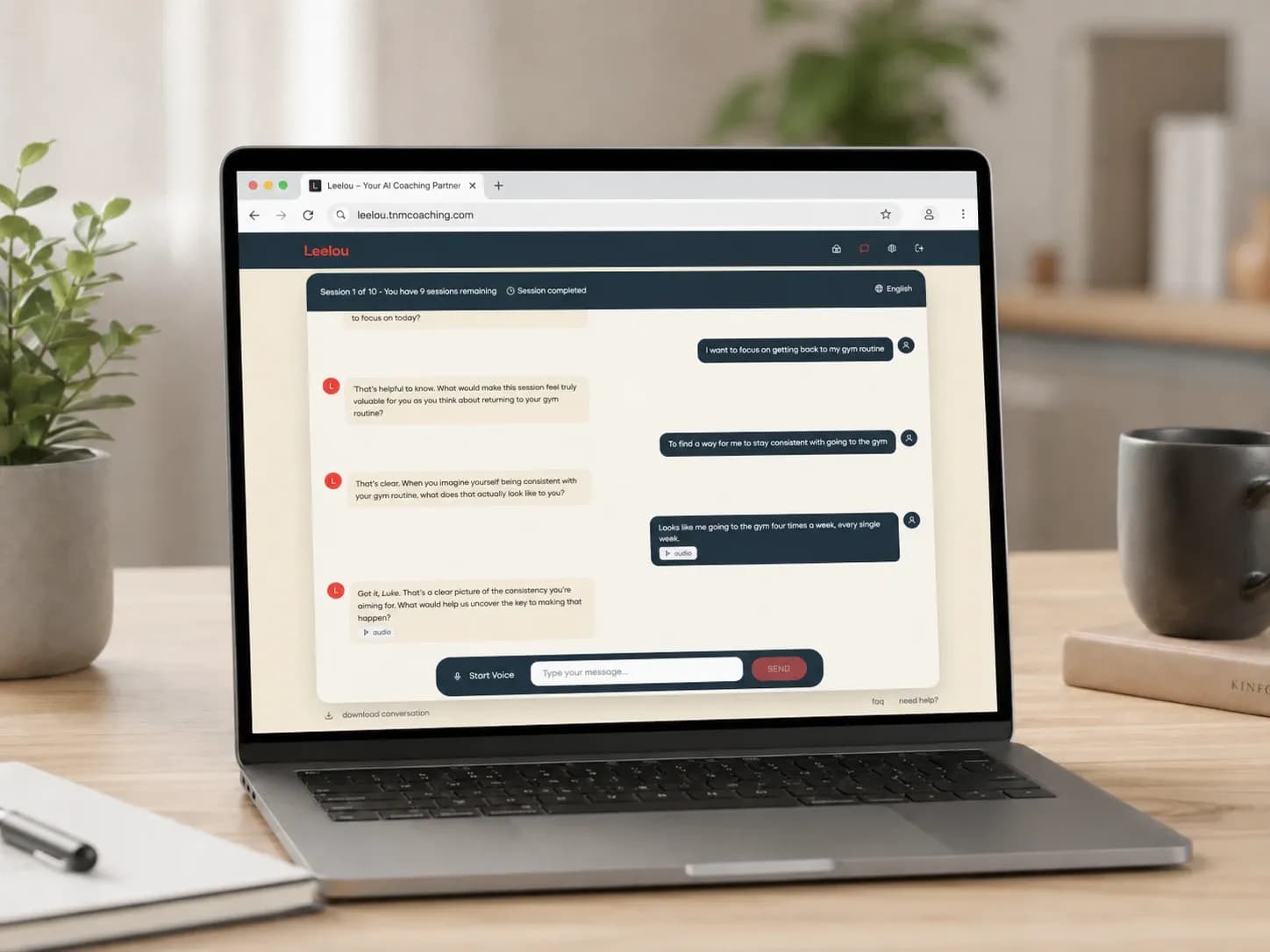
95% of onboarded regular users completed at least one session.
TNM needed more than a generic conversational interface. Leelou AI had to reflect its coaching posture and improve through testing with people who understood its quality standards.
Explore document intelligence, support triage, and internal data workflows, with people in control.
A practical framework for choosing the next improvement when your business outgrows its tools.